Evaluation
Dr. Carmona reviews your full medication history, confirms the diagnosis, and completes safety screening.
Medication-Free Relief for Depression and Anxiety
A Different Mechanism, Not Another Pill
Antidepressants work for many people, but not for everyone. If you have cycled through two, three, or more prescriptions, endured the weight gain, the blunted feeling, or the sexual side effects, and still wake up flat, the exhaustion is real. Patients describe months of low mood, thinking that moves through fog, sleep that does not restore, and a worry that never fully switches off. Work suffers, family notices, and the idea of starting yet another medication feels pointless. That pattern has a clinical name, treatment-resistant depression, and it is not a personal failure.
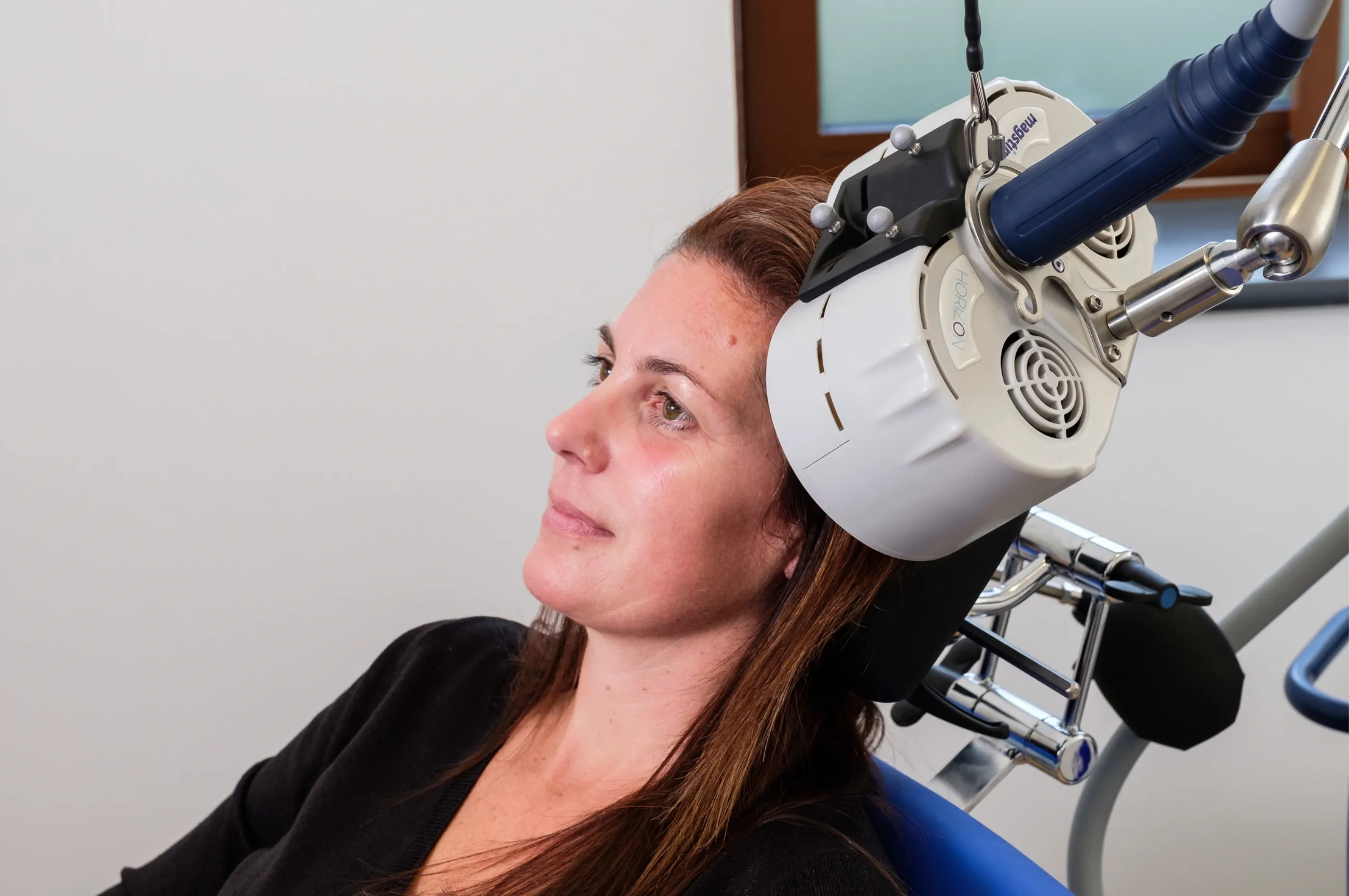
TMS therapy takes a different route entirely. Instead of putting a drug through your whole body, it delivers focused magnetic pulses to one target: the left dorsolateral prefrontal cortex, the mood-regulation hub that tends to be underactive in depression and anxious depression. Across a series of short sessions the brain builds healthier activity patterns. Because nothing enters the bloodstream, there is no weight gain, no sexual side effects, and no sedation. You sit awake in a chair, then drive yourself back to work or home to your family the same day.
The Science of Magnetic Neuromodulation
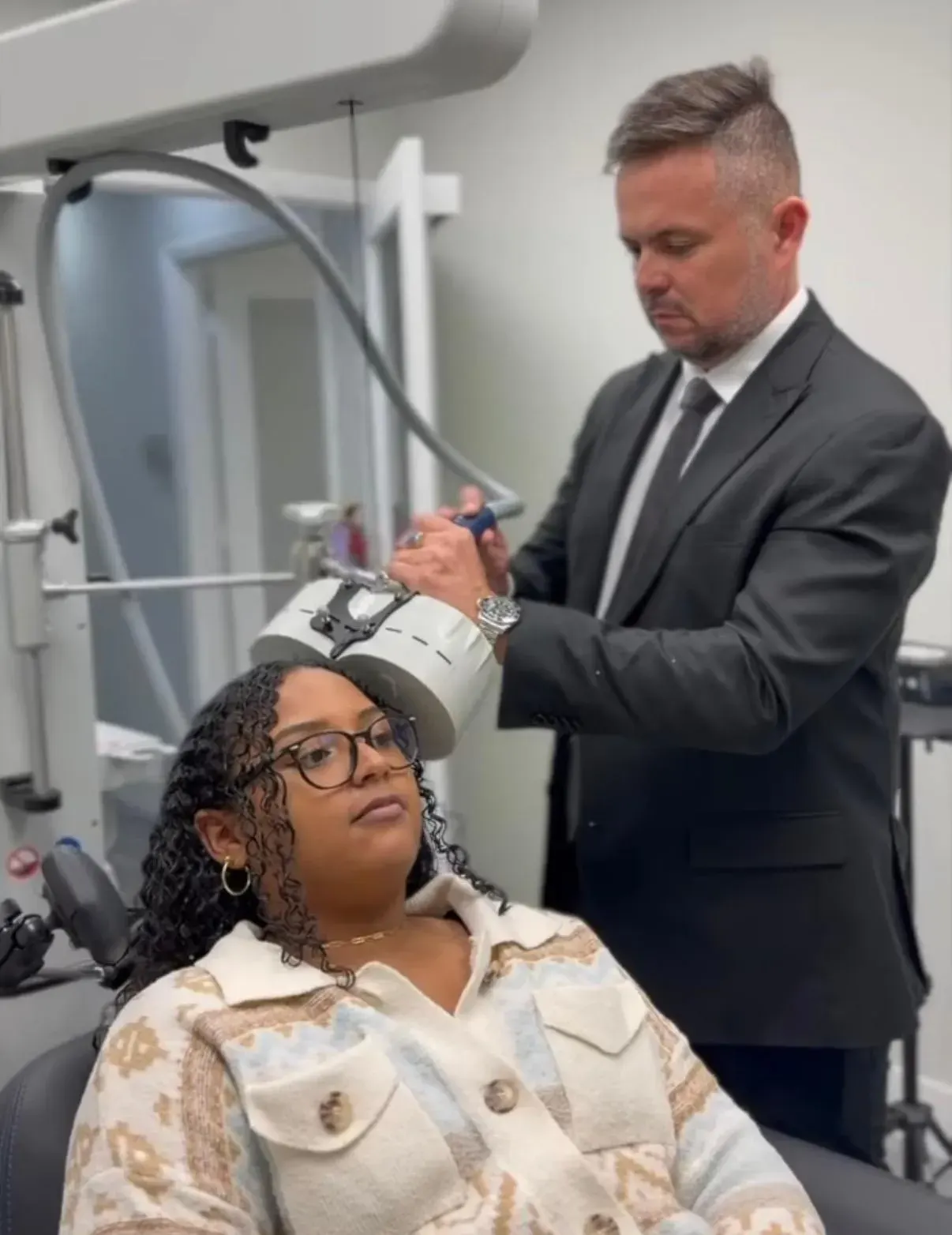
Transcranial Magnetic Stimulation is a non-invasive, FDA-cleared treatment that uses brief magnetic pulses to activate the brain regions regulating mood, worry and obsessive thinking. It was cleared for major depression in 2008, with later clearances for anxious depression and OCD. No anesthesia or sedation is involved.
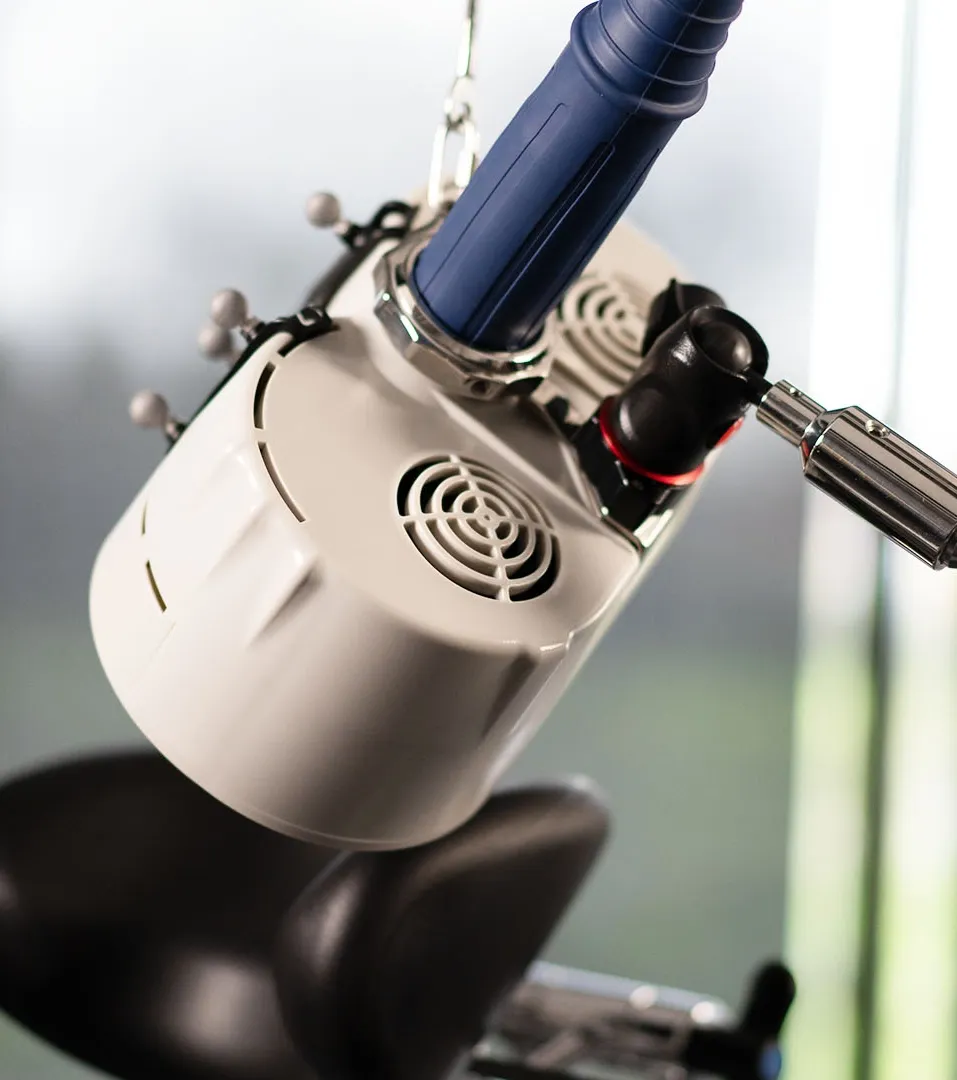
A coil rests against the scalp and delivers pulses about the strength of an MRI. They cross the skull painlessly and induce small currents in underactive mood-regulating neurons. Repeated across a course this strengthens healthy circuits, so TMS builds gradually rather than working like a pill. Most patients feel the first shift in weeks three to four.
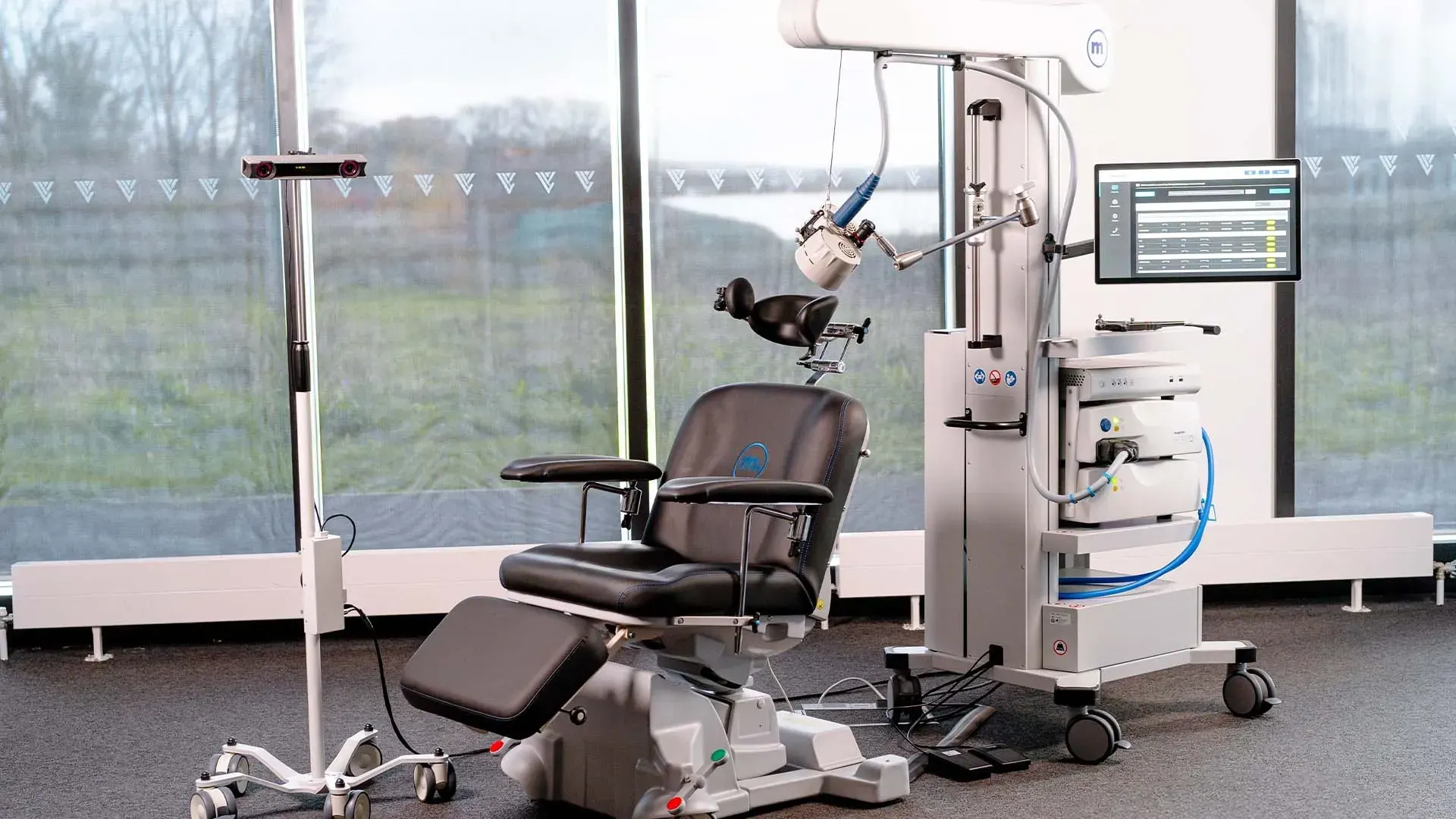
What sets neuromodulation apart from daily medication
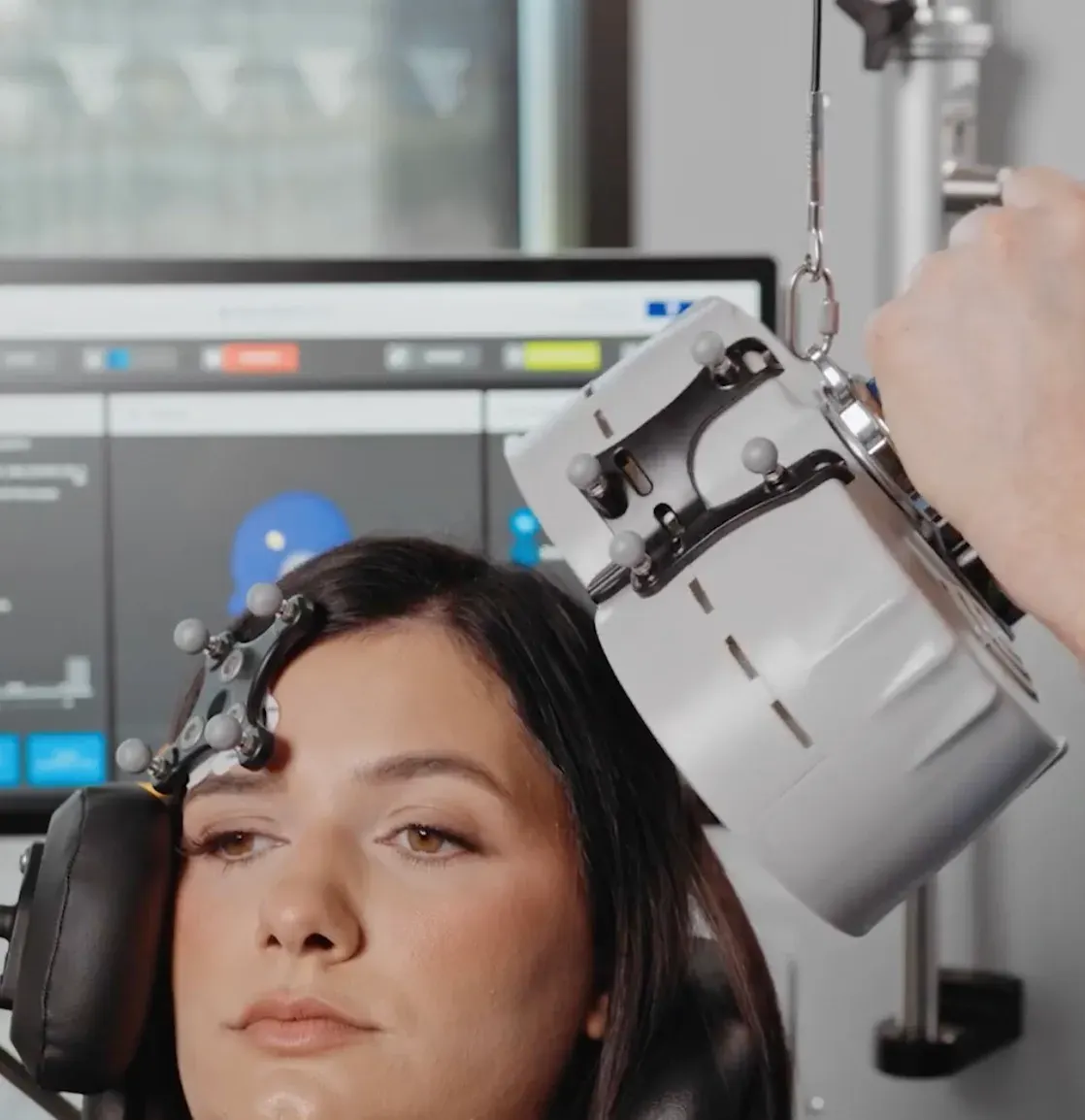
Nothing enters the bloodstream, so no weight gain or sexual side effects
You stay awake, then drive yourself home and resume your day
Many patients hold gains for a year or longer after a full course
Covered by most major insurers for treatment-resistant depression
Standardized scores at each visit show whether the protocol is working
Every session and check-in available in English or Spanish
Compare Your Options
| Treatment | Mechanism | Time per Session | Sessions Needed | Results Timeline | Downtime | Best For |
|---|---|---|---|---|---|---|
| TMS Therapy | Focused magnetic pulses to prefrontal cortex | 20-40 minutes | 30-36 sessions | 3-6 weeks | None | Treatment-resistant depression, anxious depression, OCD |
| Spravato (Esketamine) | NMDA receptor nasal spray | 2 hours monitored | 8-12+ visits | Days to 2 weeks | 2 hours in clinic | Treatment-resistant depression, acute need |
| Oral Antidepressants | Daily systemic medication (SSRI, SNRI) | Taken daily at home | Ongoing daily | 4-8 weeks | None, but systemic side effects | First-line mild to moderate depression |
| Psychotherapy Alone | Structured talk therapy, CBT and related methods | 45-60 minutes | Weekly, ongoing | 6-12 weeks | None | Mild to moderate symptoms, skill building |
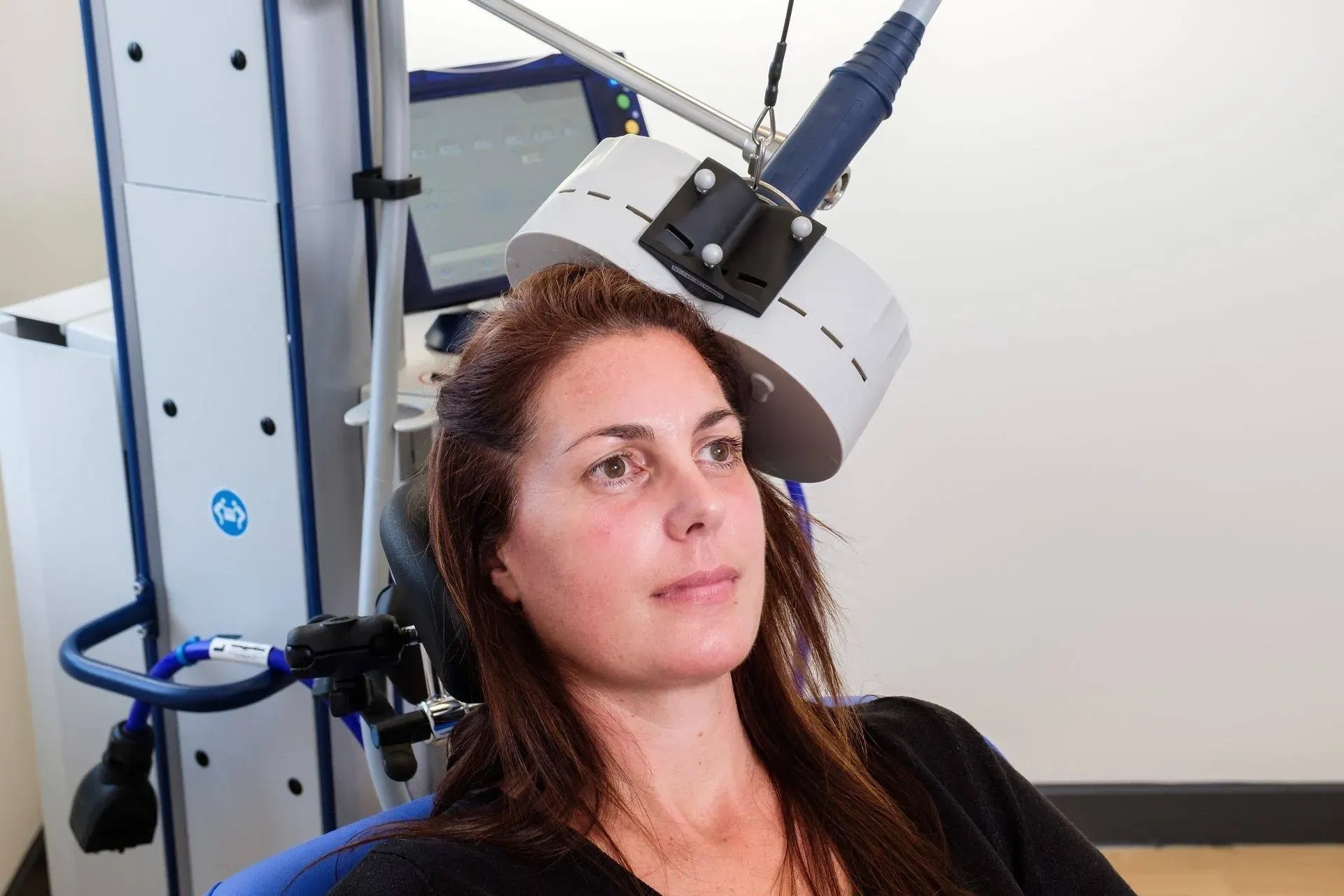
Who benefits, and who should wait
TMS is designed for adults whose depression has not responded adequately to medication. Candidacy is decided at a full evaluation, not over the phone, because safety screening matters as much as symptom history.
Implanted ferromagnetic hardware near the head is an absolute contraindication. Every candidate is screened for it before a first session is scheduled. If TMS is not appropriate, we will say so and walk you through Spravato in Miami, FL or a revised medication plan instead.
Dr. Carmona reviews your full medication history, confirms the diagnosis, and completes safety screening.
Your individual stimulation intensity is measured, so the dose is set to your brain rather than an average.
You sit awake in the treatment chair for 20 to 40 minutes, five days a week, and can read or listen to music.
PHQ-9 and GAD-7 scores are reviewed weekly and the protocol adjusted if response is lagging.
Sessions step down at the end of the course, with a maintenance plan set before you finish.
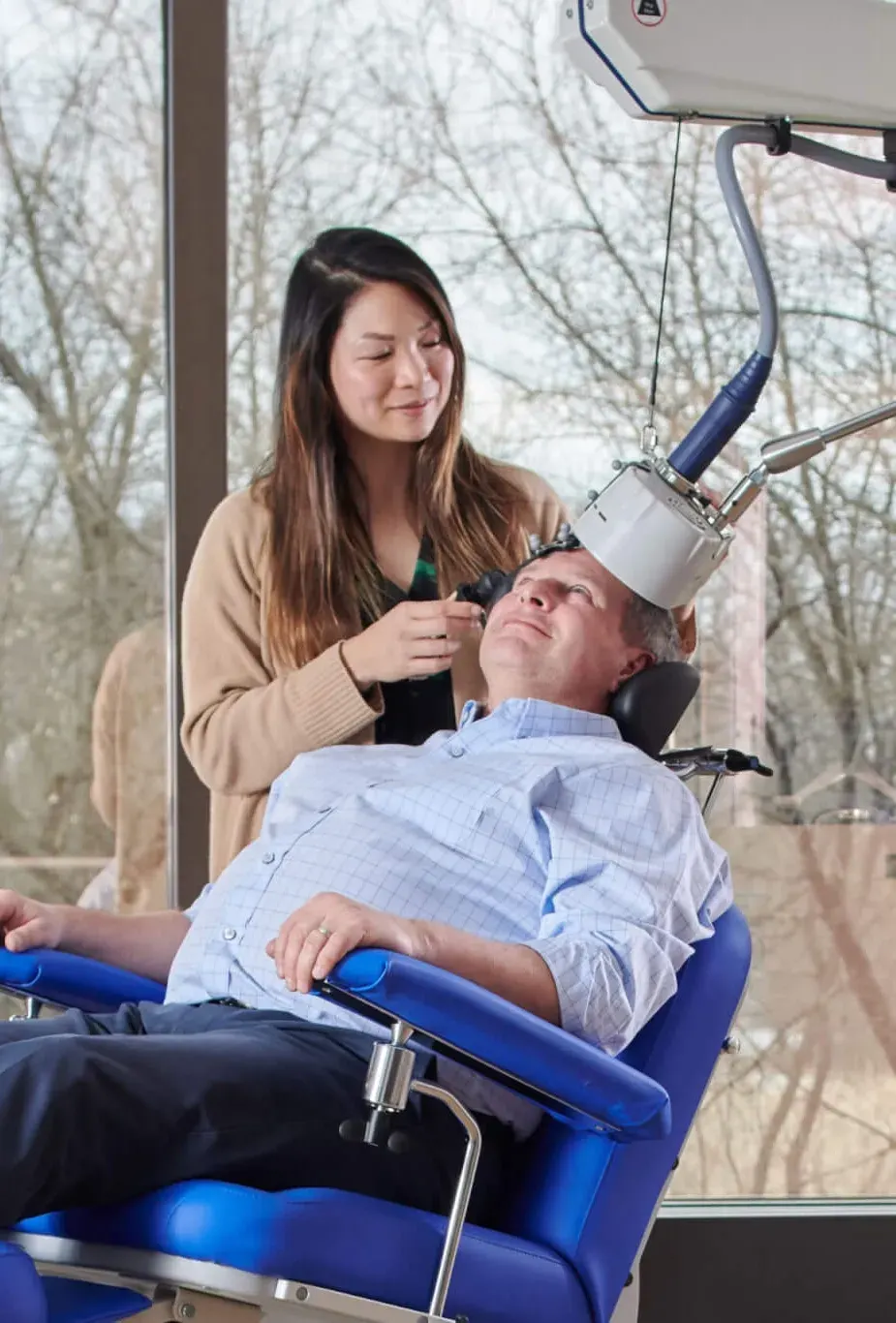
What the evidence shows
TMS has a well-documented safety profile built over more than fifteen years of clinical use, and the FDA regulates these systems as Class II medical devices. The common side effects are local and mild: scalp discomfort or tenderness at the coil site, a dull headache after early sessions, and a tapping sensation some patients find odd for the first few visits. These typically fade within the first week or two, and are managed by adjusting coil position or intensity rather than stopping treatment.
Because nothing is absorbed systemically, TMS avoids the side effects patients most often abandon antidepressants over: weight gain, sexual dysfunction, emotional blunting, and daytime sedation. Seizure is the serious risk, and it is rare, on the order of fewer than one in tens of thousands of sessions, which is why we screen for seizure history, stimulant use, and implanted hardware before your first appointment. Patients with bipolar disorder are monitored for signs of a mood switch throughout the course. You stay fully awake, no sedation is used, and you are never left unattended in the treatment room.
TMS for treatment-resistant depression is covered by most major insurers, including Medicare and the large commercial plans operating in Miami-Dade. Coverage is not automatic. Payers generally require documentation that you have tried and failed an adequate trial of two or more antidepressants, often with a course of psychotherapy alongside.
Our team handles that paperwork. We compile your medication history, submit the prior authorization, and tell you your expected copay per session before your course begins, not after. If authorization is declined, we explain why and either appeal or discuss alternatives. Where TMS is not the right fit, a psychiatric evaluation in Miami, FL can reframe the plan around medication management or therapy. Self-pay pricing is available and quoted in writing for the full course rather than per session, so there are no surprises partway through.
Certified providers, measured outcomes
Formal certification, not delegated to unsupervised technicians
One team from evaluation through your final session
PHQ-9 and GAD-7 tracked at every visit to guide the protocol
Full psychiatric care delivered in English and Spanish
Answers to what Miami patients ask most
Most patients pay only a per-session copay, because TMS for treatment-resistant depression is covered by Medicare and most major commercial plans in Miami-Dade. Your exact cost depends on your plan and deductible. We verify benefits and submit prior authorization before your course starts, then tell you the per-session figure in writing. Self-pay pricing is quoted for the full course rather than session by session.
No, TMS is not painful, though it does feel unusual at first. Most patients describe a tapping or knocking sensation on the scalp during pulses. Some feel tenderness at the coil site or a dull headache after early sessions, which usually settles within a week or two. No anesthesia or sedation is used. If the sensation is uncomfortable, we adjust coil position or intensity rather than stopping treatment.
A session runs 20 to 40 minutes depending on the protocol your clinician sets. You arrive, sit in the treatment chair fully awake, and can read, listen to music, or talk during the session. Add a few minutes for positioning at the start. Because there is no sedation and no recovery period, most patients are in and out of our Miami office in under an hour.
A standard course is 30 to 36 sessions, delivered five days a week over roughly six to nine weeks, followed by a short taper. That schedule comes from the clinical trials that established TMS efficacy, and shortening it tends to reduce results. Your weekly scores guide adjustments. Some patients later benefit from maintenance sessions, which we plan before you finish.
Most patients notice the first change between weeks three and four. Sleep often settles first, then energy and concentration, with mood lifting after. Full benefit is generally assessed at the end of the 30 to 36 session course. Because response builds gradually, we track PHQ-9 and GAD-7 scores weekly so improvement is visible in data rather than left to memory.
Neither is universally better, they suit different situations. TMS requires no sedation, no monitoring period, and lets you drive yourself home, but takes weeks to build. Spravato often works within days and is given under two hours of in-clinic observation. Patients needing faster relief may start with Spravato; those prioritizing no systemic medication often choose TMS. Your evaluation decides.
Usually not. TMS is generally delivered alongside your existing medication, and most patients continue their current prescription throughout the course. Stopping antidepressants abruptly can cause withdrawal symptoms and is never advised on your own. If a medication change makes clinical sense, your clinician will plan and supervise it as a separate, deliberate step.
TMS is not appropriate for anyone with ferromagnetic metal implanted in or near the head, such as aneurysm clips, cochlear implants, or implanted stimulators. Dental work is fine. A history of seizures or epilepsy requires specialist review first, and untreated mania or active psychosis is stabilized before neuromodulation begins. Every candidate is screened before a first session is scheduled.
Yes, TMS has a well-documented safety record across more than fifteen years of clinical use, with no evidence of cognitive harm or memory loss. Unlike electroconvulsive therapy, it does not involve anesthesia or induced seizure. The serious risk is an accidental seizure, which is rare, and screening for seizure history and implanted hardware is how that risk is managed.
Yes. R&C Psychiatry is a bilingual practice, and your evaluation, consent discussion, weekly reviews, and every treatment session can be conducted in Spanish. Nada se pierde en la traduccion, because the clinician treating you speaks the language rather than relying on an interpreter. Tell us your preference when you book and we schedule accordingly.
FDA clearance for TMS covers adults, and our Miami TMS program treats patients 18 and over. Adolescents with depression are seen through our child and adolescent psychiatry service, where evaluation, therapy, and carefully monitored medication are the established options. If a teenager has not responded to those, their clinician will discuss what the current evidence supports.
No referral is needed to book a consultation with us directly. What insurers require is documentation, specifically evidence of adequate trials of two or more antidepressants and often a course of therapy. If you have been treated elsewhere, bringing that history speeds authorization considerably. We request records on your behalf when you do not have them.