Evaluation
Dr. Carmona confirms treatment resistance, reviews cardiac history, and arranges insurance authorization.

Rapid-Acting Relief for Treatment-Resistant Depression

A Separate Pathway in the Brain
If you have taken two or more antidepressants and still feel the same weight every morning, the problem may not be the dose. Conventional antidepressants act mainly on serotonin, norepinephrine, and dopamine, and for roughly a third of patients that route simply does not produce relief. Meanwhile the waiting continues: four weeks for a trial, then a taper, then another four weeks. Patients describe losing whole seasons to that cycle, along with the quiet fear that nothing is going to work.
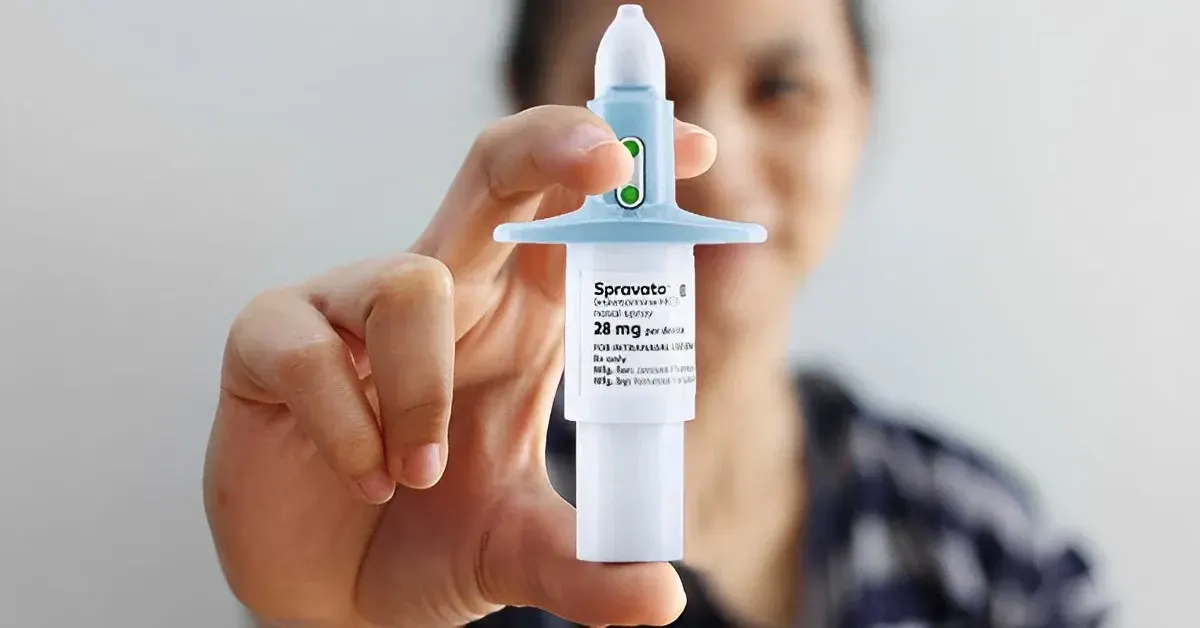
Spravato acts on a different system entirely. Its active ingredient, esketamine, targets NMDA glutamate receptors, triggering a rapid increase in synaptic connections in mood-regulating regions. That mechanism is why response can appear in days rather than weeks, and why it can work for patients whom serotonin-based drugs never reached. Spravato is always given together with an oral antidepressant, never alone, and always in a certified clinic where blood pressure and alertness are watched for two hours afterward.
Esketamine, Explained Plainly
Spravato is the brand name for esketamine, a nasal spray the FDA approved in 2019 for treatment-resistant depression in adults, and later for depression with acute suicidal thoughts. It is always taken alongside an oral antidepressant. Because of the risk of sedation and dissociation, it is dispensed only in clinics certified under a federal REMS program.
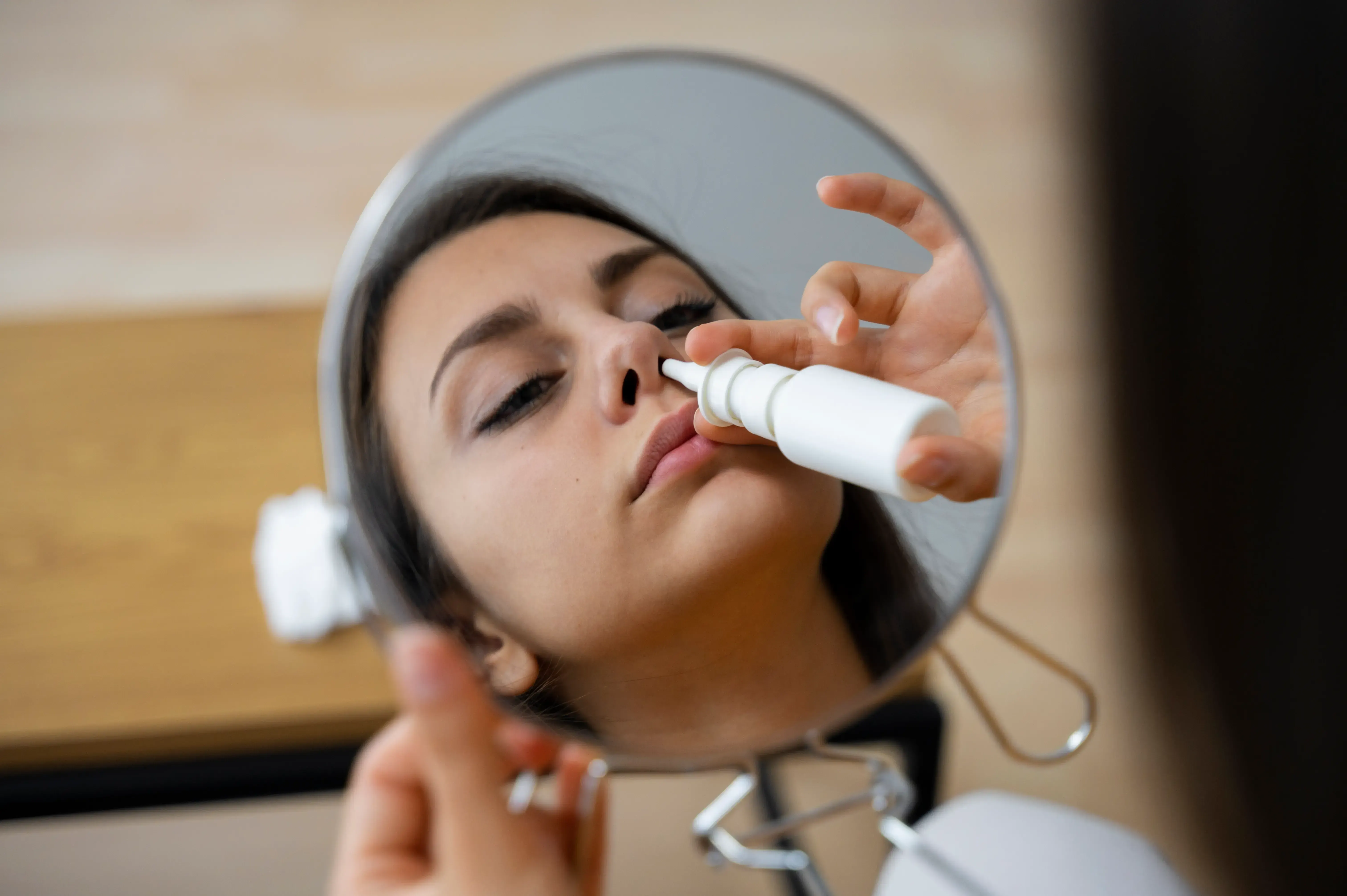
Esketamine blocks NMDA glutamate receptors, restoring synaptic connections in circuits weakened by chronic depression. That is a different target from serotonin, which explains the speed: many patients notice a change within a week or two. You self-administer the spray under supervision, then stay two hours for monitoring.
What esketamine offers that daily tablets do not

Many patients report improvement within days, not weeks
Targets glutamate, reaching patients serotonin drugs did not
Every dose given and monitored by our own staff
Covered by Medicare and most major commercial plans
Dosing can step down to hold remission long term
Consent, dosing and monitoring in English or Spanish
Compare Your Options
| Treatment | Mechanism | Time per Session | Sessions Needed | Results Timeline | Downtime | Best For |
|---|---|---|---|---|---|---|
| Spravato (Esketamine) | NMDA glutamate receptor nasal spray | 2 hours monitored | 8 doses over 4 weeks, then maintenance | Days to 2 weeks | No driving that day | Treatment-resistant depression, acute need |
| TMS Therapy | Focused magnetic pulses to prefrontal cortex | 20-40 minutes | 30-36 sessions | 3-6 weeks | None | Patients avoiding systemic medication |
| Oral Antidepressants | Daily systemic medication (SSRI, SNRI) | Taken daily at home | Ongoing daily | 4-8 weeks | None, but systemic side effects | First-line mild to moderate depression |
| Psychotherapy Alone | Structured talk therapy, CBT and related methods | 45-60 minutes | Weekly, ongoing | 6-12 weeks | None | Mild to moderate symptoms, skill building |

Who qualifies, and who should wait
Spravato is for adults whose depression has not responded to adequate trials of other antidepressants. Eligibility is decided at a full evaluation, because both your medication history and your cardiovascular safety matter.
Spravato is a controlled substance and is never dispensed for home use. If it is not appropriate for you, we will say so and discuss TMS therapy in Miami, FL or a revised medication plan instead.
Dr. Carmona confirms treatment resistance, reviews cardiac history, and arranges insurance authorization.
Blood pressure is measured and your oral antidepressant plan is confirmed before any dose is given.
You spray the doses yourself, in our office, with a staff member present throughout.
You rest in a quiet room while blood pressure and alertness are checked at set intervals.
You are released to your ride home, and scores are reviewed before the next visit.

What the monitoring period is for
The two-hour observation after each dose is not a formality. The most common effects are dissociation, a temporary sense of detachment from your surroundings, along with dizziness, nausea, sedation, vertigo, and a transient rise in blood pressure. These usually peak around 40 minutes and settle well before you leave. Our staff check your blood pressure and alertness at set intervals, which is exactly why dosing happens in a certified clinic rather than at home. The FDA prescribing information documents these risks in full.
Esketamine is a Schedule III controlled substance with recognized potential for abuse and misuse, so no supply ever leaves the building. Driving is prohibited for the rest of the dosing day. Spravato is not used in pregnancy or breastfeeding, and it is avoided in uncontrolled hypertension, aneurysmal vascular disease, and a history of intracerebral hemorrhage. Patients with a psychosis history need specialist review first. We screen for each of these before your first dose is scheduled, and reassess before every visit.
Spravato is covered by Medicare and most major commercial plans operating in Miami-Dade, but essentially never without prior authorization. Payers expect documented evidence that you tried and did not respond to at least two antidepressants at adequate dose and duration. Billing also splits in two: the medication itself and the clinic monitoring time are charged separately, which is why quotes from different providers can look so inconsistent.
We handle the authorization. Our team compiles your medication history, submits the request, and tells you your expected per-visit cost in writing before induction begins. If a payer declines, we explain the reason and either appeal or lay out alternatives. Where Spravato turns out not to be the right route, a psychiatric evaluation in Miami, FL can rebuild the plan around a different approach. Self-pay pricing is quoted for the full induction course, not dose by dose.

REMS-certified and continuously supervised
Dosing and monitoring in our own office, not outsourced
Formal certification plus 25 years of clinical practice
The clinician who evaluates you supervises your dosing
Full psychiatric care in English and Spanish
Answers to what Miami patients ask most
Most patients pay a per-visit copay, because Spravato is covered by Medicare and most major commercial plans in Miami-Dade. Billing separates the medication from the clinic monitoring time, so quotes vary between providers. We verify your benefits, submit prior authorization, and give you the expected per-visit figure in writing before induction starts. Self-pay pricing is quoted for the whole induction course.
Plan on about two and a half hours. Self-administering the spray takes only a few minutes, but federal rules require two hours of monitoring afterward, plus a short pre-dose blood pressure check. You rest in a quiet room during that period. Because you cannot drive afterward, arrange your ride home before you arrive.
No. Spravato is a nasal spray, so there are no needles and no injection. Some patients find the taste unpleasant or notice mild nasal irritation. The harder part for most people is the dissociation, a temporary floating or detached feeling that usually peaks around 40 minutes and fades before discharge. Staff stay with you throughout.
The induction phase is twice weekly for four weeks, so eight doses. Response is then formally reassessed. Patients who respond typically move to weekly dosing for a month, then every one to two weeks as maintenance. Some continue maintenance for many months to hold remission. Your schedule is set by your response, not a fixed template.
Faster than oral antidepressants. Many patients notice a change within the first week or two, sometimes after the second or third dose. Sleep and energy often shift before mood does. That speed is the main reason Spravato is chosen when waiting four to eight weeks for a new tablet to work is not clinically safe.
They suit different needs. Spravato usually works within days but requires two hours of monitoring per visit and no driving that day. TMS takes three to six weeks to build but has no sedation, no monitoring, and no driving restriction. Patients needing rapid relief often start with Spravato; those avoiding systemic medication often prefer TMS.
Yes, and you generally must. Spravato is approved for use together with an oral antidepressant, never as a standalone treatment. Most patients continue their existing prescription, and sometimes a new oral antidepressant is started alongside. Never stop or change a psychiatric medication on your own, as abrupt discontinuation can cause withdrawal symptoms.
They are related but not the same. Spravato is esketamine, one mirror-image molecule of ketamine, delivered as a nasal spray and FDA approved specifically for treatment-resistant depression. IV ketamine infusions use the racemic mixture and are prescribed off label for depression. Only Spravato carries FDA approval for this use, and only it is dispensed under the REMS program.
Spravato is avoided in pregnancy and breastfeeding, and in patients with uncontrolled high blood pressure, aneurysmal vascular disease, or a history of intracerebral hemorrhage. A psychosis history requires specialist review beforehand, and active substance use needs stabilizing first given the abuse potential. Every candidate is screened before a first dose is scheduled.
No, and this is not negotiable. Sedation and dissociation make driving unsafe for the remainder of the dosing day, so you need a ride, rideshare, or public transport arranged before you arrive. Most patients feel entirely normal the following morning and drive as usual then. Plan transport for all eight induction visits in advance.
Yes. R&C Psychiatry is a bilingual practice, and your evaluation, consent discussion, dosing instructions, and the full monitoring period can be conducted in Spanish. The clinician treating you speaks the language rather than working through an interpreter, which matters when you are describing something as subjective as dissociation.
No referral is required to book a consultation with us directly. What insurers require is documentation of two or more adequate antidepressant trials that did not work. If you were treated elsewhere, bringing those records speeds authorization considerably, and we request them on your behalf when you do not have them.